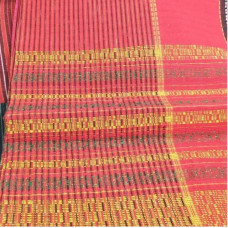
Ulos

Ulos is a traditional textile from the Batak ethnic group in Medan, Indonesia. It holds great cultural and symbolic significance for the Batak people, representing their identity, social status, and spirituality. Ulos is traditionally handwoven and made from cotton, although silk and other fibers are sometimes used as well.
The process of making ulos involves several intricate steps. First, the cotton fibers are harvested, cleaned, and spun into yarn. Then, the yarn is dyed using natural dyes made from plants, roots, and bark, resulting in vibrant and earthy colors. The dyed yarn is then carefully woven on a backstrap loom, a traditional weaving tool.
Ulos comes in various designs and patterns, each carrying its own meaning. Some common motifs include geometric shapes, animals, plants, and ancestral symbols. These motifs often reflect the Batak people's connection to nature, their beliefs, and their social hierarchy.
Ulos holds a significant role in Batak ceremonies and rituals. It is used as a ceremonial garment during important events such as weddings, funerals, and other traditional ceremonies. Ulos is also given as a gift to show respect, honor, and blessings to others.
Beyond its cultural significance, ulos has gained recognition as a valuable art form. The intricate weaving techniques, vibrant colors, and meaningful motifs make ulos a unique and beautiful textile. It has become a symbol of Batak identity and heritage, and efforts are being made to preserve and promote the art of ulos weaving.
In summary, ulos is a traditional textile from the Batak ethnic group in Medan, Indonesia. It is handwoven using cotton or other fibers, dyed with natural colors, and features various meaningful motifs. Ulos holds great cultural, social, and spiritual significance for the Batak people and is used in ceremonies and as a symbol of identity.